Fit comes before height
Two questions narrow the decision quickly: - Can the machine pass through the smallest doorway, corridor, or elevator on the route? - Does the work require a small amount of outreach to clear a counter, pipe, or handrail?
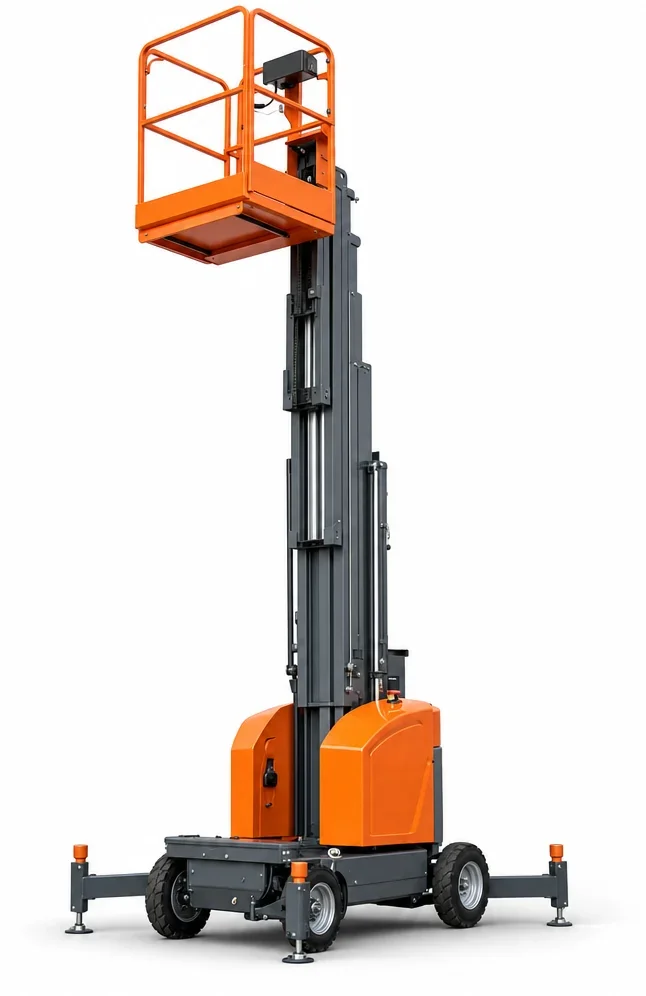
Vertical masts offer slim chassis widths and, on some models, a short jib or extension to bridge minor obstacles. For straightforward up-down work with room to turn, compare electric scissor lifts.
Local building patterns that matter
Many Indianapolis projects involve interior fit-outs in active mixed-use properties. Non-marking tires, low noise, and tighter tailswing protect finishes and keep work moving near public areas. When a job transitions outdoors, even briefly, remember that silty clay loam and wet seasons can make small wheels sink; vertical masts are intended for firm, level surfaces.
Access path details to verify
- Door widths, thresholds, and elevator capacities if changing floors.
- Floor ratings around mezzanines and infill slabs.
- Turning space at the task location relative to nearby fixtures and displays.
When another category fits better
- Repeated travel over rough or soft ground: look at rough-terrain scissor lifts.
- Up-and-over geometry around major obstacles: see articulating booms.
Keep the comparison specific
A useful equipment discussion starts with the work height, the practical machine position, the route into the area, the floor or ground along that route, and the people, tools, or material involved. Those details clarify whether vertical access, outreach, or material placement is the real constraint.